

The sound of Star Wars has come a good distance since John Williams first put these iconic themes into the world in 1977. Since then, Williams has continued to make the franchise one of the crucial sonically recognisable and has been joined by the likes of Natalie Holt, Nicholas Britell and double Oscar winner Ludwig Göransson for the small-screen iterations of the franchise.
The most recent composer tasked with following in William’s footsteps is Michael Abels, an American composer whose work on the 2022 opera Omar landed him a Pulitzer Prize. He’s additionally written scores for Jordan Peele’s motion pictures, Get Out and Nope.
The Acolyte takes Star Wars in a brand new route, set roughly 100 years earlier than Episode I: The Phantom Menace, marking the earliest period we’ve seen the franchise in live-action.
Nevertheless, the collection has drawn notably extra viewers criticism than different Star Wars tasks. Followers have strongly bemoaned The Acolyte’s storylines, performances and episode lengths, with many lambasting Lucasfilm president Kathleen Kennedy and claiming that it conflicts with different Star Wars plot traces.
Combined critiques apart, The Acolyte tells the story of a gaggle of Jedi coming to phrases with rising darkness in an period of peace. And, fortunately, Michael Abels’ work on the rating is among the many stronger components of the collection. Nevertheless it didn’t come with out its personal challenges.
“It was essential that, with these new issues, there’s additionally some familiarity,” says Michael Abels. “As a result of it’s Star Wars and everybody has distinctive issues they love in regards to the franchise. Definitely, for me, a type of issues is the music.”
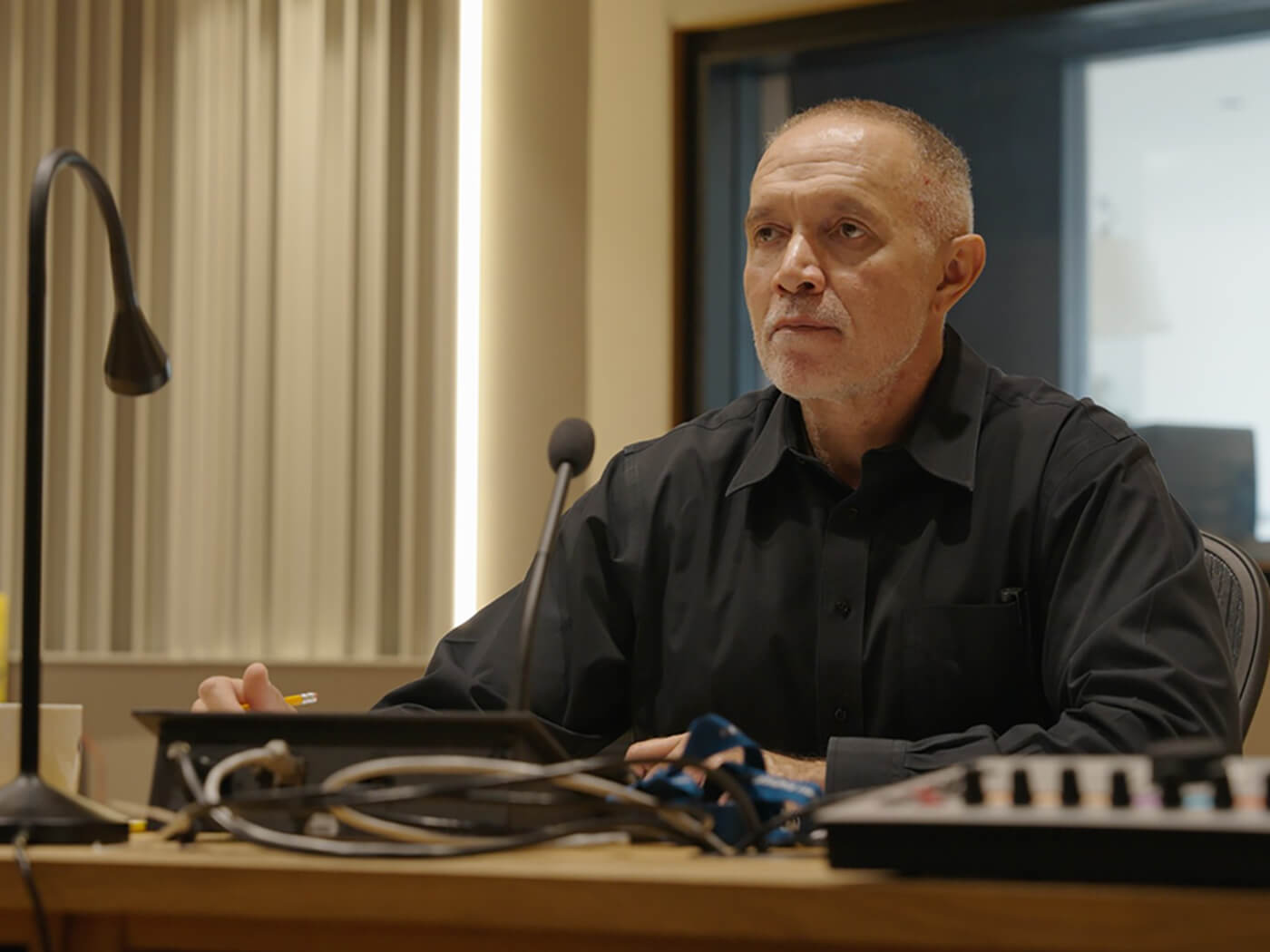
 Michael Abels. Picture: Disney
MusicTech: How did you method The Acolyte’s earlier setting and this new period of the Star Wars universe by means of the music?
Michael Abels: “We selected to have music the place the feelings and the actions really feel like conventional Star Wars. So, there’s one a part of the music that’s very consciously the large house opera — within the conventional fashion of John Williams — then there’s one other a part of it that, because the characters confront distinctive experiences and conditions, the music portrays the brand new planets, species and characters within the universe. There’s a aware steadiness between the normal and the untraditional within the rating.”
The collection was accompanied by Victoria Monét’s Energy Of Two, a vocal-led pop single. That is uncommon for the franchise — the place did this concept come from?
“A vocal-led single is a primary for Star Wars, and I used to be excited to be part of that. The primary piece of music I wrote for the collection was the music of the Ascension scene in episode three. I wrote that piece and, in its first model, it was fully vocal. Regardless that within the episode, you hear it with drums and different devices, my authentic tackle that was it was all feminine vocals.
“Close to the tip [of the series], we revisited that concept and one of many producers, Rain Roberts, performed some music by Victoria Monét and D’Mile I used to be immediately so enthusiastic about the opportunity of having the ability to work with them.
“I went to D’Mile and performed him a number of tracks that I assumed have been worthy of being sampled and that had musical materials he might draw from. I used to be delighted when he selected the Ascension scene music as a result of that was the place the entire venture began. Then Victoria, over the observe that D’Mile produced from the Ascension rating, wrote this lyric and this melody that simply makes it sound prefer it’s coming precisely from the voice of Osha, the lead character.”
 A nonetheless from ‘The Acolyte’. Picture: Disney
Did you will have any favorite worlds or characters to attain?
“There are loads of musical themes — that’s simply a part of what makes the music of Star Wars. Osha has a theme, although you don’t essentially hear it till later. Her theme is available in when she’s feeling weak; it’s from very inner moments we hear this theme. Mae [Osha’s twin sister] has music, however it’s very martial arts-oriented, very percussive. There are loads of Japanese taiko drums and each different sort of percussion instrument that goes in Mae’s vibe.
“There’s a theme that will get performed lots for Sol. I assume it’s his theme, however it’s a theme of the aspiring justice of the Jedi when Osha first sees the Jedi ship. That theme performs not as a result of Sol’s within the image, however as a result of it represents her aspirations. And there’s one other theme for the character who we’re about to fulfill — it very a lot rises from the deep. It begins on the very lowest C and rises up within the strings as a result of that character is evil rising. So, you may inform, I feel, the quantity of enjoyable I had discovering the themes of the characters and the story.”
Was there a way of expectation to stay as much as the legacy that John Williams and Skywalker Sound have left?
“I feel anybody engaged on something concerned with Lucasfilm [is aware of] the large legacy and expectation to stay as much as. And that’s intimidating however, to be artistic, you must simply set all that apart and do what feels proper for the story.
“I wasn’t bodily at Skywalker Sound — the vast majority of the rating was recorded in Vienna, with the musicians of Synchron Stage who have been wonderful. Skywalker Sound and Lucasfilm’s post-production staff have been intimately concerned in making all of that occur.”
 A nonetheless from ‘The Acolyte’. Picture: Disney
Talking of recordings, how did you discover the steadiness between stay and digital devices?
“I like writing for stay devices however it’s not a requirement of my artwork. Given the sort of rating we have been making an attempt to create, stay devices have been required, so far as I used to be involved. On the similar time, when there’s a brand new sound that works within the story and on this planet, however it’s outdoors of stay devices, I don’t have an issue utilizing digital devices. I wouldn’t report one thing stay if it was already sounding nice just about.
“We recorded all of the strings and brass stay and loads of the woodwinds. There’s a duduk sound which is digital — it was proper within the mock-ups and didn’t should be modified. Then the percussion, now we have these nice stay taiko drums, and there’s nothing that appears like that. However loads of the extra percussion is half stay and half digital. I took it on a case-by-case foundation of which components felt proper for the scene. I wasn’t making an attempt to prejudge that till I simply watched it and heard it collectively.”
How does your method differ from engaged on, say, a Jordan Peele venture to The Acolyte?
“There are some key variations. The composer at all times has a really private relationship with the director of a movie or the showrunner of a collection; the way you method [the score] depends on the character of that working relationship.
“There’s typically a big quantity of music in a collection — even the biggest movie can’t evaluate to an enormous collection with wall-to-wall music. The Acolyte isn’t fully wall-to-wall music, however there’s definitely lots. So one of many variations is that you just work on a collection for a very long time and, as you get nearer to the tip, there’s a [better] understanding of how issues have to go; you’re employed in a staff for such a interval that you just simply develop a system, which streamlines the method.
“In a movie, there’s a little bit extra time to dwell on every element. Jordan is an individual who has a mastery of each side of filmmaking in each style. There’s time to return and look, inform the story a distinct manner and see how that performs. I discover Jordan extremely responsive to check screenings. Typically, if he will get nice suggestions at a check screening, he’ll need to lean into the issues that the viewers is responding to.
“It’s nice to have the ability to create in these other ways and take a look at issues out. I’ve definitely realized a lot about storytelling by doing each movies and TV collection.”
 Michael Abels and ‘The Acolyte’ showrunner Leslye Headland. Picture: Disney
Have been there any distinctive devices or sounds that you just used on The Acolyte that we’d not have heard in different Star Wars tasks?
“I don’t know what would have been used that hasn’t been heard ultimately or in some unspecified time in the future within the Star Wars world. There are some pretty intense, horrific moments in The Acolyte — or, not less than, the method to the music may be very a lot in that vein.
“Some cues are very dissonant and atonal and designed to terrify. So, there, I’ve used sound design facets and prolonged orchestral taking part in strategies which is uncommon for Star Wars.”
What else ought to viewers find out about The Acolyte?
“By the point you attain the tip of the collection, the themes come collectively in a manner that feels very natural and it’s a terrific musical conclusion, in addition to a conclusion to a narrative. I hope that individuals who recognize music’s skill to inform a narrative, hear that within the music and recognize that for what it’s.”
‘The Acolyte’ is offered to stream now on Disney+.
This interview has been edited and condensed for brevity and readability.
